


9 Lessons That Wedding Planning Taught Me About Making Life and Work Easier

I disappeared from my blog for three weeks, and no, it was not because I forgot how calendars work.
I was planning my wedding! We took a week off beforehand to road trip up to Virginia, then spent a few days there pulling together all the final details for the big day. There were timelines, boxes, outfit pieces, vendor messages, weather checks, seating details, and at least one moment where I stared into space wondering why people do this voluntarily. Proof below.

But I am back! If you missed me, thank you! You can now expect the normal weekly blog posts again.
This week felt like the right time to share what wedding planning taught me about life, work, projects, priorities, and staying somewhat sane when there are too many moving pieces.
Big projects reveal your real habits
Wedding planning has a funny way of exposing how you handle pressure.
If you tend to overthink, it gives you 1000 tiny items to overthink. If you struggle to ask for help, it hands you a task list that cannot physically be done alone. If you like control, it introduces weather, timelines, other people, and delays.
Basically, it becomes one giant mirror.
The good news is that the lessons transfer. These 9 wedding planning lessons apply to project management, daily priorities, and general well-being just as much as they apply to centerpieces and ceremony music.
1. You cannot do everything at once
At some point, I had to accept that I could not do it all.
Trying to do everything at once only made every task feel heavier and put me into panic.
What helped was choosing the next most important thing. Not the next 15 things. Just one, then once that one was done, moving on to the next most important thing.
That is true for any big project. When everything feels urgent, pick the task that actually moves things forward. Then do that before adding more noise. My husband calls this "following the critical path" and reminded me of it often as we were working through everything.
Capacity is not the same as work ethic. You can care deeply and still have limits.

2. Make the plan, then work the plan
There is a special kind of peace that comes from writing things down.
My particular plan was color coding, with matching tabs, and all in a binder that looks like it was designed by a professional, but it doesn't need to be that pristine. It just needs to be clear enough that you can follow it when your brain gets tired, or you can pass it off to someone else and they can follow directions.
For the wedding, that meant lots of lists, timelines, and knowing what had to happen before we left, what could happen once we arrived in Virginia, and what did not matter until the day itself.
A good plan saves you from renegotiating every decision in real time.
Make the plan. Work the plan. Adjust when needed. Repeat.
3. Not everything deserves your energy
Wedding planning comes with endless opportunities to care too much.
Color shades. Font size. Glass types. The placement of one tiny item that no guest will ever remember or even notice in the first place.
Some details matter because they reflect the experience or outcome you want. Others only feel important because you are deep in decision fatigue and striving for perfection.
And this important lesson hit me hard when it comes to business: attention is expensive.
At work, at home, and in life, not everything earns the same amount of emotional or mental investment. Some things deserve your best thinking. Some deserve a quick decision. Some deserve to be released completely to someone else.
Protect your energy like it is part of the budget, because it is.
4. Delegate before you are overwhelmed
I used to think delegation happened when you had too much to do.
Now I think delegation should happen before that point.
Waiting until you are overwhelmed means you have to explain things while stressed, hand things off while irritated, and hope people can read your mind. That is not fair to anyone.
Delegating earlier gives people time to help well. It also reminds you that support is not failure because delegating also requires a massive amount of trust. Once you get used to doing it and realize the outcomes usually lead to pretty good results, it allows you to do it more often and with better timing.
This applies everywhere. If a task does not require you specifically, share it. If someone has offered to help, let them. If the whole project depends on you doing every single thing, the project has a weak spot and needs attention.

5. Build in buffers
The week before any big project is due is not the time to create a timeline with zero breathing room.
Something will take longer than expected. Someone will have a question. A detail will need fixing. You will lose track of an item that was definitely right there five minutes ago.
Buffers are not wasted time. They are what keep a normal delay from becoming a full crisis.
Build them into projects, travel days, events, and even regular weeks. Leave space between tasks. Give yourself more time than the best-case scenario. Future you will be grateful.
6. You need a life outside of the project
When you are in the middle of a big project, it can start to swallow every conversation and every free minute. I joked up until the wedding that being a bride had become my entire personality.
Wedding planning easily became the only thing I could talk about. There was always another decision to make, another errand to run, another detail to check.
But stepping away mattered, which is why our road trip up was so special.
Meals that had nothing to do with timelines. Laughing about non-wedding things created memories. Activities allowed me to burn off steam and release stress. And I was actually able to rest.
The project never becomes less important, but at the end of the day, you are still a person. You need sleep, movement, quiet, joy, and conversations that are not just updates.
A full life makes you better at the project, not worse.
7. Done is sometimes better than perfect
Some things were not perfect, but they were finished.
And honestly, finished gave me a huge sigh of relief.
Perfection sounds noble until those minor errors become a little gremlin in your brain telling you you're a failure. Minor errors don't matter. At a certain point, extra tweaking does not improve the outcome. It only drains you or the person doing the tweaking.
This does not mean standards do not matter. They do. Always hold yourself to a higher standard.
BUT understand that not every task deserves museum-level precision. Sometimes the win is making a decision, checking the item off the list, and moving on.

8. Stress is just information, don't misinterpret it as an emergency
Stress showed up plenty. Pretty sure my Oura ring thought I was dying. But I started to notice that stress was not always a sign that something was wrong.
Sometimes stress meant I needed food. Sometimes it meant I needed sleep. Sometimes it meant I had too many open loops in my head and just needed to write them down.
Stress can be a signal. Ask yourself what it's pointing to. Is it a missing plan, an unclear decision, or a boundary that needs to be set?
Not every stress signal requires panic.
This this:
What is this stress trying to tell me?
Is there an actual problem, or am I overloaded?
What is the next small thing I can do?
That pause can change the whole moment and calm your brain down.
9. The real takeaway
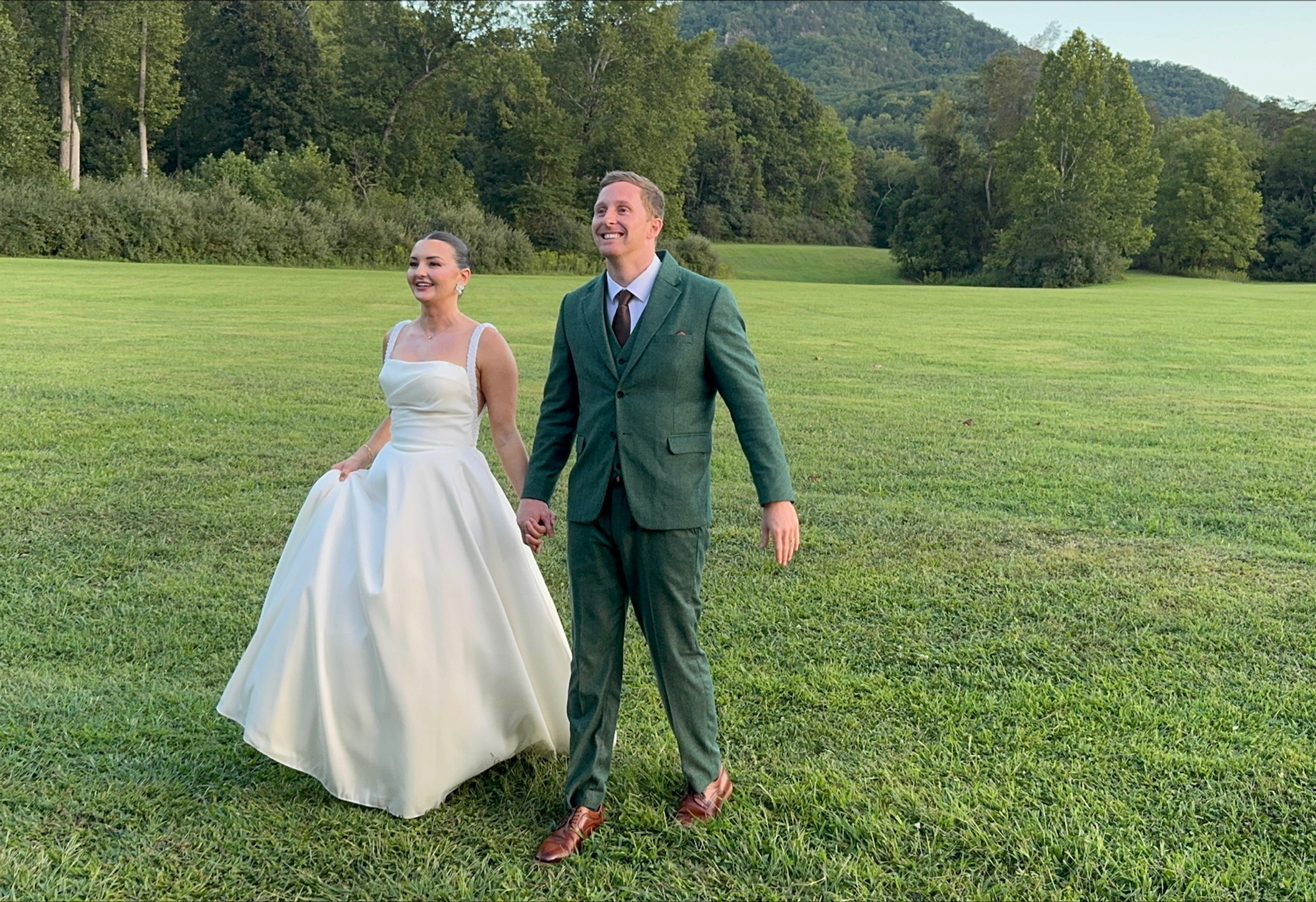
And now, for my biggest lesson yet...
Just spend the extra money and hire a wedding planner.
Preferably before you are standing in Virginia surrounded by ribbon, boxes, and the bold belief that you “totally have this."
*She did not have this*
I say this with love, experience, and with the slightly haunted energy of someone who has DIY'd an entire wedding.
Good help is worth every penny. A planner will handle the logistics, will help you negotiate contracts, and will carry all the mental weight. They know what questions to ask before those questions become problems. They protect your time, your energy, and probably at least one relationship.
That lesson applies beyond weddings too. Sometimes the smartest move is getting the right help sooner.
You cannot do everything at once. You do not have to do everything yourself. And if there is a version of the project where someone else can carry the clipboard, LET THEM.
With love, happy to be back!!


Comments